My Ride K-12
Tyler Technologies, IncEducation
4.3915.00 Reviews
- Version
- 2026.3.27
- Installs
- 500.00K
- Age Rating
- Everyone
Screenshots
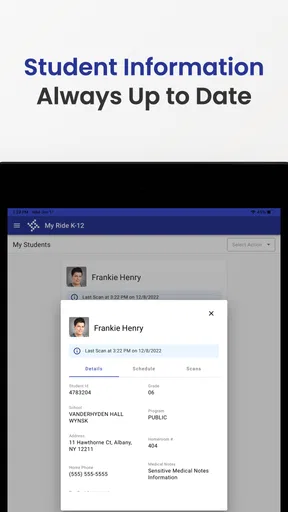
Our Review of My Ride K-12
 Analysis by Appyee
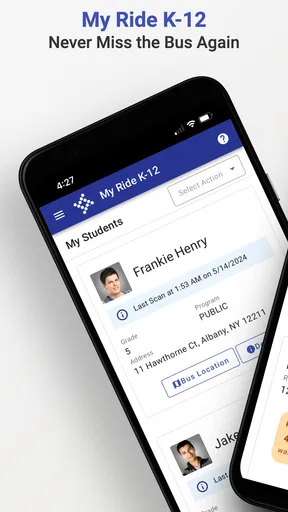
Getting a child to the bus on time is a small daily task that can become surprisingly stressful when schedules change, weather slows traffic, or a family is managing several children at once. My Ride K-12 is an education app from Tyler Technologies, Inc that focuses on making school transportation easier to follow. I found its appeal less in entertainment and more in reducing the number of moments when a parent has to guess where the school bus is or whether the morning routine is still on track.
The app’s store summary, “Never miss the bus again,” captures its purpose without suggesting that it replaces the school’s transportation department. It is best understood as a companion for families whose school system uses the service. That distinction matters: the app can be useful only when the relevant transportation information is available through the participating school or district. If you are looking for a general map, a universal transit planner, or a way to track any vehicle, this is not that kind of tool.
How My Ride K-12 fits into a school morning
In practical use, the strongest idea is having school transportation information in one place instead of relying entirely on printed notices, memory, or last-minute messages. A parent can use it as part of the evening preparation routine, then check again before the child leaves home. That is a more realistic workflow than treating it as something to stare at continuously.
A typical morning might look like this: I would check the planned pickup information while the child is getting dressed, make sure the bag and coat are ready, and use the app as a final timing reference before walking outside. If the family has more than one child, the value comes from reducing separate reminders and keeping school travel details connected to the people who need them. The app does not eliminate the need for a backup plan, but it can make the decision about when to leave the house less dependent on guesswork.
That is also why the app belongs in the education category rather than being treated as an ordinary navigation utility. Its purpose is tied to the school day, student transportation, and the communication needs around getting children to and from school. The experience is likely to feel most useful to parents and guardians, while students with a suitable device may also use it as a reminder for their own routine.
What the free access means for families
My Ride K-12 is free to download and use, so there is no purchase decision to make before trying it. That makes the initial value straightforward: a family can test whether it works with its school transportation setup without paying for a subscription or buying a separate tracking device. I appreciate that because transportation tools are only worthwhile when they match the local route information and daily habits.
Free access does not mean every family will receive the same practical benefit. The important question is whether the child’s school or district supports the service and supplies the necessary transportation details. If that connection is not available, installing the app alone will not turn it into a universal school-bus tracker. In that situation, the school’s normal communication channel remains more useful.
For a supported family, the value is time and reassurance rather than a collection of extra digital features. A parent may avoid unnecessary calls, repeated messages, or standing outside too early. A student may gain a clearer routine for leaving home. Those benefits are modest individually, but they can matter every weekday, especially when a caregiver is also preparing breakfast, working from home, or getting younger children ready.
Where it is more useful than ordinary alternatives
The usual alternative is a paper schedule or a message from the school. Those options are simple and sometimes perfectly adequate, but they are easy to misplace and do not naturally fit into a changing morning. Another alternative is contacting the school office or transportation department whenever there is uncertainty. That may provide authoritative help, but it is slower and creates extra work for everyone.
A general map application is also not a direct substitute. Maps can estimate road travel and show public transit, yet a school-bus routine depends on student-specific transportation information rather than a generic route between two addresses. My Ride K-12 is valuable precisely because it is aimed at the school transportation relationship instead of trying to serve every kind of journey.
There is a trade-off here. A general map is usually more flexible for family trips, walking directions, and public transportation. My Ride K-12 is narrower, but that narrow focus is an advantage when the only question is whether a child’s school ride is approaching or whether the family should prepare for pickup. I would not replace a full navigation app with it, and I would not expect it to replace official school announcements during major disruptions.
Small workflow improvements that make a difference
The first useful habit is checking the app before the child is fully ready, not after everyone is already waiting at the curb. That gives the family time to respond if the expected timing changes. It also prevents the common mistake of treating live or current transportation information as a last-second alarm rather than one part of a broader routine.
The second is using it alongside a household backup rule. For example, a parent can decide that the child leaves the house only after the bag, outerwear, and phone are ready, while the app supplies the timing cue. This separates preparation from monitoring. If the phone battery is low, the network is unreliable, or the app cannot be checked, the family still has a plan instead of being completely dependent on one screen.
The third is making sure every caregiver understands the same routine. A child may be collected by a parent on some days and another trusted adult on others. The app can be part of the shared process, but it should not be the only source of information passed between adults. I would still keep the school’s contact method and the planned pickup details accessible, particularly for unusual dismissal days.
Those are not flashy features, but they are the kind of practical choices that determine whether a transportation app helps or merely adds another notification to manage. The best result comes when My Ride K-12 supports a calm routine rather than encouraging constant checking.
What I would watch before relying on it
The biggest limitation is dependence on the school or district connection. A parent may install the app and expect immediate, useful information, only to discover that the local transportation setup is not available or that account details need to be handled through the school. That is not necessarily a defect in the app itself, but it is an important condition of use and should be checked early.
I would also avoid treating any transportation display as a guarantee that a bus will arrive at an exact moment. Road conditions, loading delays, weather, and operational changes can affect real-world timing. The app can improve awareness, but it cannot control the vehicle or remove every uncertainty from a school route. Families should still allow enough time to reach the stop safely.
Another point is attention. A tool designed to reduce stress can become distracting if a parent refreshes it repeatedly or expects a precise answer for every small delay. In my view, it works better as a quick planning reference than as a constant live dashboard. That approach also makes the free app feel more valuable because it is supporting a routine rather than demanding daily effort.
Who is likely to get the most value
I would recommend trying it first to parents and guardians whose children use a participating school-bus service and whose mornings are affected by uncertain arrival times. It is particularly sensible for families with changing work schedules, multiple children, long walks to the stop, or a history of missing the bus by only a few minutes. In those situations, even a small improvement in timing can prevent a difficult start to the school day.
It may also help a student become more independent. An older child can learn to check the transportation routine and prepare without waiting for an adult to repeat every instruction. I would still match that responsibility to the child’s age and judgment. The app can support independence, but it should not be used as a reason to leave a young child unsupervised or to ignore normal safety arrangements at the stop.
The audience is broad enough for the Everyone content rating, and the app is available on devices running Android 8.0 or later. That makes it accessible to families using older compatible phones, although the actual usefulness still depends on the local school connection and the family’s device habits. The current version is 2026.3.27, so users should keep the installed app reasonably current when their device allows it.
Who should choose another approach
I would skip it if your child’s school does not use the service, if you need public-transit planning for the whole family, or if your main goal is navigation to places unrelated to school transportation. A general map application will be the better choice for walking routes, driving directions, and mixed travel plans. Likewise, families who already receive clear, timely transportation updates through a school portal may find that adding another app offers little improvement.
I would also be cautious about relying on it as the sole emergency communication method. School closures, route cancellations, changes to dismissal, and urgent instructions should be confirmed through the official channel designated by the school. My Ride K-12 can fit into that system, but it should not be mistaken for the school office or treated as a replacement for direct instructions when circumstances are unusual.
How the app has earned attention
The app has reached over 500 thousand installs and holds a 4.3 average from around 5.1 thousand ratings, with 915 reviews. Those figures suggest that many families find the concept useful, while the written feedback is still worth reading for local context because transportation experiences can vary by school and district. I would pay attention to comments from users connected to a similar school system rather than assuming every setup behaves identically.
Tyler Technologies, Inc is the developer behind the app, and it was released on January 18, 2024. The release date and ongoing version information indicate that this is a maintained product rather than an abandoned utility, but maintenance alone does not guarantee that a particular school’s information will be complete or perfectly timely. The local implementation remains central to the experience.
My value judgment after using it
Because it is free, My Ride K-12 does not need to outperform every alternative to justify a trial. Its value is strongest when it solves a specific recurring problem: knowing when to prepare for a child’s school transportation without relying entirely on memory or a paper notice. That is a clear benefit, and the absence of a purchase cost lowers the risk of testing it.
At the same time, free access should not be confused with universal usefulness. The app is not a complete family travel planner, not a substitute for school communication, and not a promise of exact arrival timing. Its focused design means it can be very practical for one household and irrelevant for another. That is a fair trade-off for an education app built around school-bus routines.
My recommendation is simple: try it if your school supports it, then judge it by whether it makes your actual morning calmer. If it gives you a dependable reference for preparing your child and reduces unnecessary waiting or calling, it delivers meaningful value at no cost. If your school is not connected or your needs extend beyond school transportation, skip it and use the broader tools that fit those journeys better.
For the right family, My Ride K-12 is a focused, practical companion rather than an app that tries to do everything. I would keep the school’s official contact method as a backup, build a routine around safe preparation, and use the app as one helpful part of that routine. That balanced approach is where it makes the most sense.
Verdict
Strengths of My Ride K-12
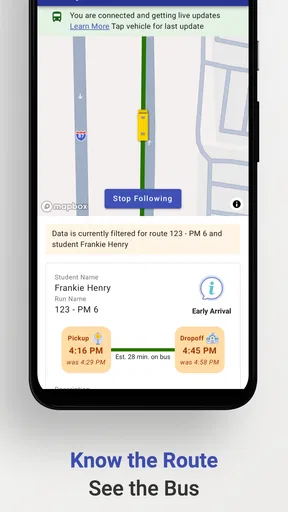
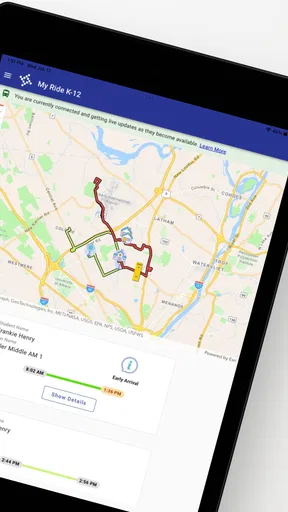
- Real-time bus tracking helps families monitor journeys more confidently.
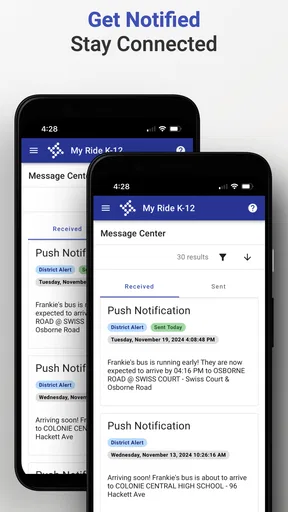
- Parents can receive alerts about delays, arrivals, and route changes.
- Student ridership updates provide useful visibility after boarding or exiting.
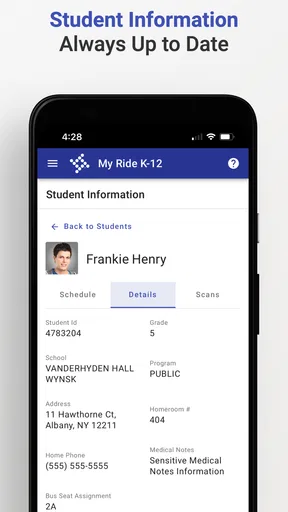
- Route details and stop information are easy to check from one place.
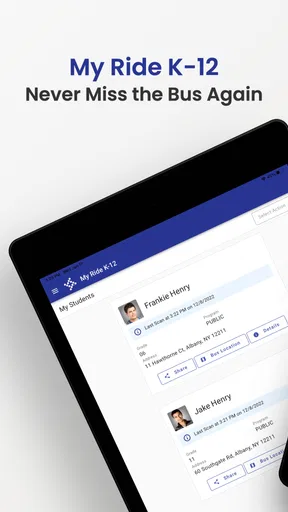
- Supports better coordination between schools, drivers, students, and families.
Limitations of My Ride K-12
- Availability and features depend on the school district’s transportation system.
- Location updates may be delayed by weak GPS or mobile connectivity.
- Requires account access provided or managed by the child’s school.
- Notifications can become excessive when multiple alerts are enabled.
- Some users may find the interface less useful outside school hours.
Other Releases by Tyler Technologies, Inc
View All
CorrectPay
Communication3.6
Similar Picks in This Category
View All
Duolingo: Language Lessons
Duolingo4.7

Google Classroom
Google LLC2.8

Unacademy: Learn & Crack Exams
Unacademy3.2

Bible App for Kids
Life.Church4.4

Cake - Learn English & Korean
Cake Corp.4.7

Brainly: AI Homework Helper
Brainly4.5
Frequently Asked Questions
What is My Ride K-12 and who is it designed for?
My Ride K-12 is a school transportation app designed to help families manage student bus journeys. Depending on the school district’s setup, parents or guardians can use it to view route information, receive transportation updates, and monitor a child’s bus status. The exact features available may vary, so users should confirm that their school or district supports the app before downloading it.
How do I log in to My Ride K-12?
Access to My Ride K-12 is generally connected to information provided by the student’s school district or transportation department. After installing the app, users may need to enter an email address, phone number, student ID, or account details supplied by the school. If the app does not recognize your information, contact the district rather than creating multiple accounts, since access is often restricted to registered families.
Can My Ride K-12 track a school bus in real time?
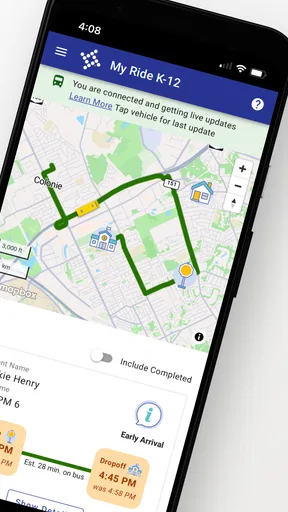
The app may provide bus location, estimated arrival times, route details, or notifications when a vehicle is approaching, but these options depend on the district’s equipment and configuration. Tracking information can occasionally be delayed or unavailable because of poor connectivity, GPS limitations, schedule changes, or technical issues. It should be treated as a helpful estimate, not a guarantee of the bus’s exact location.
Will My Ride K-12 notify me about delays or schedule changes?
My Ride K-12 can be used by participating schools or transportation providers to send alerts about delays, cancellations, route changes, and other important transportation updates. However, notifications depend on the district publishing the information and on your device’s notification permissions being enabled. It is a good idea to check the app regularly and continue following official school communication channels for urgent announcements.
Is My Ride K-12 free and what should I check before downloading it?
The app is typically available to families without a separate subscription fee, although transportation eligibility and access are determined by the school district. Before downloading, check that you have selected the official My Ride K-12 app from a trusted app store and that your district participates in the service. Also review the requested permissions, keep your contact details current, and understand that available features may differ between school systems.
